How to Choose the Right Living Room Chair
There is a specific kind of buyer's regret that comes only from furniture. You spend real money, wait weeks for delivery, the thing arrives, and somewhere between the excitement of unboxing and sitting in it for the first time you realise it is not quite right. The colour is slightly off in your actual lighting. It is less comfortable than the showroom suggested. It looks smaller than it did in the product photo.
Furniture regret is so common because most people buy on appearance alone and discover after the fact that a chair has to do more than look good in a photograph. It has to feel right in your specific room, with your specific lighting, for the specific way you actually sit.
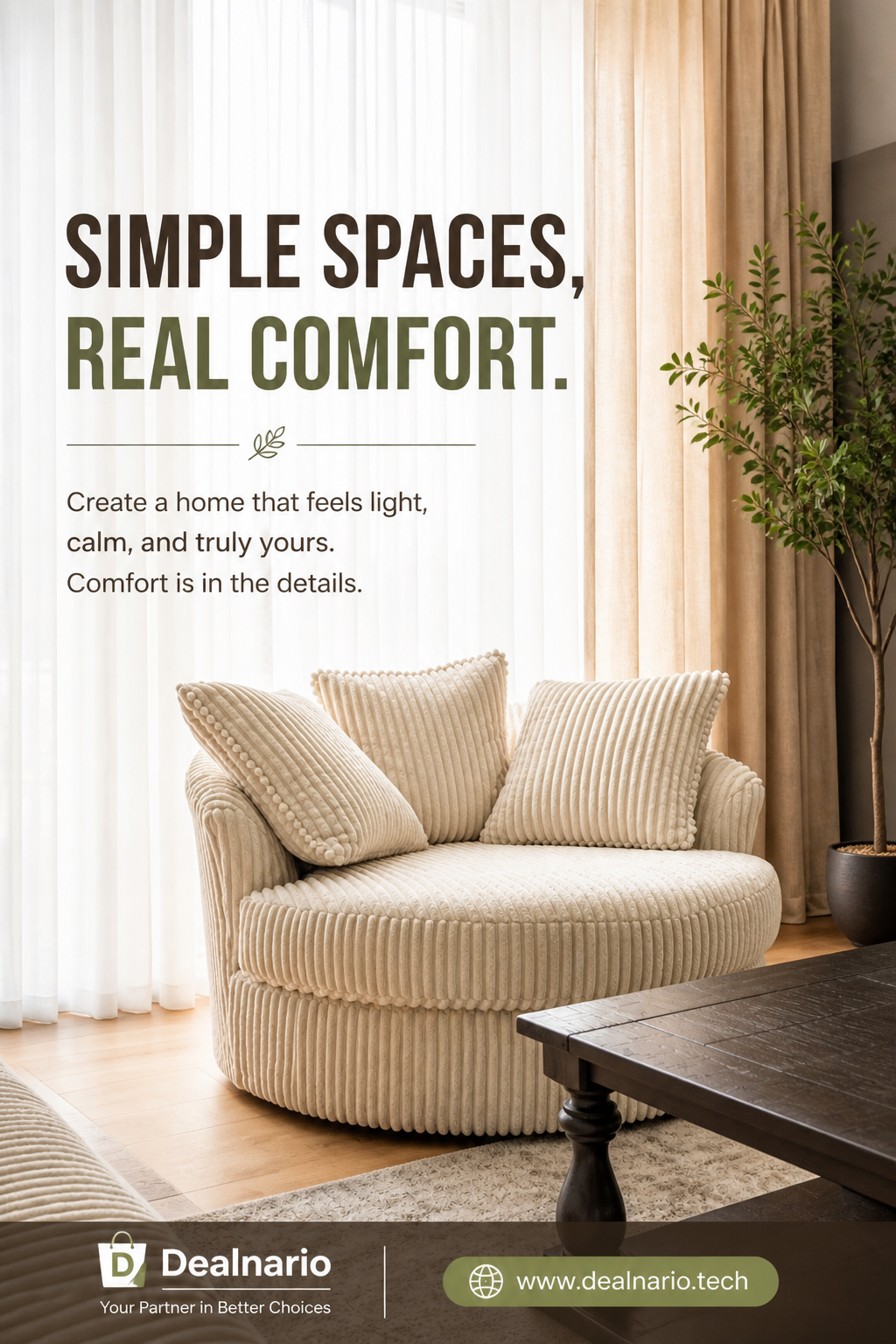
The chair in this image is a good example of what modern living room furniture is moving toward in 2026. A rounded silhouette, cream corduroy fabric, generous cushioning, low profile. It is designed for comfort first and it shows. But even a chair this inviting needs to be chosen thoughtfully to actually work in a home.
Here is what to think about before buying any significant piece of living room furniture.
Size Is Where Most Decisions Go Wrong
Scale is the single most common furniture mistake in living rooms. People see a chair they love, buy it, and discover it overwhelms a smaller room or gets completely lost in a larger one.
Before buying any chair, measure your room and mark the footprint of the furniture on the floor with tape. This sounds unnecessarily thorough until you do it once and realise how different a space looks with furniture in it versus empty. A chair that seems modest in a showroom can consume a significant portion of a small living room.
The accent chair in this image has a round base which actually helps in tighter spaces because it has no sharp corners cutting into sightlines. Round and oval furniture tends to feel less imposing than rectangular pieces of the same size, which is worth keeping in mind when a room is on the smaller side.
Allow at least 18 inches of clearance between furniture pieces for comfortable movement. Less than that and the room starts to feel crowded regardless of how good individual pieces look.
Comfort Takes Priority Over Everything Else
A beautiful chair that is uncomfortable will stop being used within weeks. It becomes expensive decoration.
Seat depth matters more than most people realise. A deep seat is wonderful for curling up but uncomfortable for people with shorter legs who cannot sit with their back against the cushion and their feet on the floor at the same time. A shallower seat works for upright sitting but not for relaxed lounging. Know which you actually want the chair for.
Seat height determines how easy it is to get in and out. Lower seats feel more relaxed and contemporary but require more effort to stand from, which matters more as people age or if the chair will be used by people with mobility considerations. Standard seat height is around 17 to 18 inches from the floor.
Cushion density is the thing showrooms make hardest to evaluate because new cushions always feel good. High-density foam holds its shape for years. Low-density foam compresses and loses its comfort relatively quickly. If you are buying online, look for foam density specifications. Anything above 1.8 pounds per cubic foot is a reasonable minimum for a seat cushion that will see regular use.
The corduroy fabric on the chair in this image is a good choice for a living room accent piece. Corduroy is durable, relatively easy to clean, and feels soft without being as delicate as velvet or as prone to pilling as some chenilles. Cream is a commitment in terms of maintenance but the visual warmth it brings to a room is hard to replicate with darker tones.
How Fabric Choice Affects Everything
Fabric selection is where furniture shopping gets genuinely complicated because different materials age differently, clean differently, and feel different across seasons.
Performance fabrics are worth considering seriously for any household with children, pets, or high traffic use. Microfibre, olefin, and solution-dyed acrylics resist staining far better than natural fabrics and clean more easily without damaging the material. They have improved significantly in terms of appearance and feel over the past decade and many are now visually indistinguishable from premium natural fabrics.
Velvet reads as luxurious and photographs beautifully but shows marks from sitting, attracts pet hair aggressively, and requires careful cleaning. It works in rooms that are used gently and maintained consistently.
Linen is breathable, natural, and has a relaxed elegance that works in almost any interior style. It wrinkles and is not as stain-resistant as synthetic options, but it ages gracefully in a way synthetic fabrics rarely do.
Leather and faux leather are easy to clean and durable but feel cold in winter and sticky in summer. They work well in contemporary and industrial interiors but can feel incongruous in the kind of warm, natural setting shown in this image.
For a cream accent chair like this one, a stain protector applied after purchase buys significant peace of mind without affecting the look or feel of the fabric.
Colour and How Lighting Changes Everything
The colour of a piece of furniture in a showroom or product image and the colour in your home are often genuinely different, and this surprises people every time.
Showrooms use carefully controlled warm lighting that flatters furniture. Product photography does the same. Your home has a specific light quality determined by how many windows you have, which direction they face, and what kind of bulbs you use. Cool northern light reads differently than warm southern afternoon light and both of them will change how a cream or beige piece actually appears in your room.
If you are seriously considering a large or expensive piece, most good retailers offer fabric samples. A physical sample held against your walls and floors in your actual room tells you more than any number of product photographs.
Neutral tones like cream, oatmeal, warm white, and sand are consistently the safest choices for living room seating because they work with almost any other colour in the room and do not date the way stronger accent colours sometimes do. The chair in this image would integrate into a wide range of interiors precisely because the colour is warm but not committed to a specific palette.
The Living Room Furniture Trends Worth Knowing in 2026
Rounded furniture is everywhere right now and it has held its position as a dominant trend for longer than most expected. The softness of curves in a living room — whether in a circular chair, an oval coffee table, or a curved sofa — creates a sense of calm and comfort that sharp angular furniture simply does not.
Natural materials and textures are equally prominent. Boucle, corduroy, linen, rattan, and solid wood are all having extended moments because they bring warmth and tactile interest into spaces that can otherwise feel flat.
The overall movement is toward rooms that feel genuinely comfortable rather than rooms that perform comfort for photographs. Oversized cushions, generous seat depths, warm lighting, plants, and layered textures all contribute to spaces that feel lived in and inviting rather than staged.
Minimalism has not disappeared but it has softened. The cold, spare interiors that dominated design content a decade ago have given way to something warmer and more personal. Less stuff, but chosen carefully for comfort and meaning rather than maximum visual impact.
Buying Furniture Online vs In Store
Online furniture buying has become far more viable than it was five years ago but it still requires more care than in-store shopping.
Read dimensions carefully and map them in your room before ordering. Check return policies thoroughly because furniture returns are often expensive or complicated even when a retailer technically accepts them. Read reviews specifically for comments about colour accuracy and comfort over time rather than just initial impressions.
In store, sit in everything you are seriously considering. Sit for longer than feels natural. Five minutes in a chair tells you things about it that thirty seconds does not. Walk around it. Look at the construction underneath if you can. Check whether the legs are solid wood or plastic. Pull gently at the fabric to see how it responds.
The investment in time before buying is proportional to the amount you are spending. A chair you will sit in daily for ten years is worth an hour of careful consideration.
For a curated selection of living room furniture and home decor that balances comfort with style across different budgets, Dealnario covers the home and garden category with practical guidance to help you make decisions you will not regret.


0 Comments